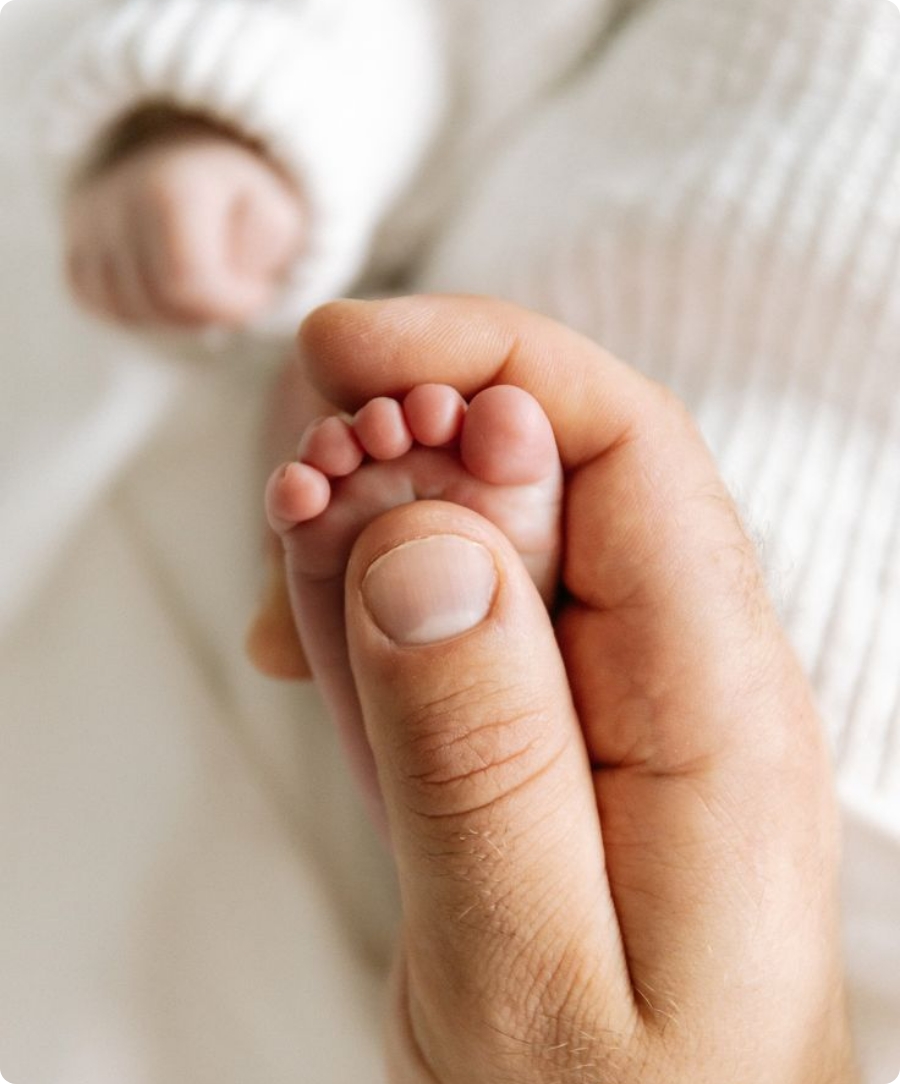

In the first few months, touch is one of the primary forms of communication between a baby and their caregiver. Long before words, it is through being held, snuggled, and through skin-to-skin contact that a baby begins to feel security, comfort, and a sense of belonging. This contact helps transmit calmness and reinforces a feeling of protection.
Touch as an Emotional Regulator
Touch serves a much deeper function than simply soothing. When a baby is held, gently rocked, or touched delicately during a bath or a diaper change, they receive consistent signals of protection and attention. These moments help them regulate their emotions, feel contained, and perceive the outside world as a safe place. For a newborn, this sensation is essential for adapting to their new reality outside the womb.
Transforming Care into a Moment of Connection
For parents as well, touch is an opportunity for connection. Often, the simplest caregiving tasks become the most valuable moments of the day precisely because they allow one to be truly present.
-
Dressing the baby calmly
-
Applying lotion with gentle movements
-
Simply keeping them close to your body
These are gestures that create intimacy and strengthen the affective bond. It isn’t about doing something extraordinary, but about transforming routine care into a meaningful encounter.
A Silent Presence
In the first months of life, a baby is still adjusting to the world and needs stable, affectionate references. Touch meets this need naturally. More than a gesture of physical care, it is a way of saying, “I am here.” Often, it is precisely this silent presence that provides the most comfort.
In the first few months, the baby is still adapting to the outside world and needs stable and affectionate points of reference.